
 EN
EN




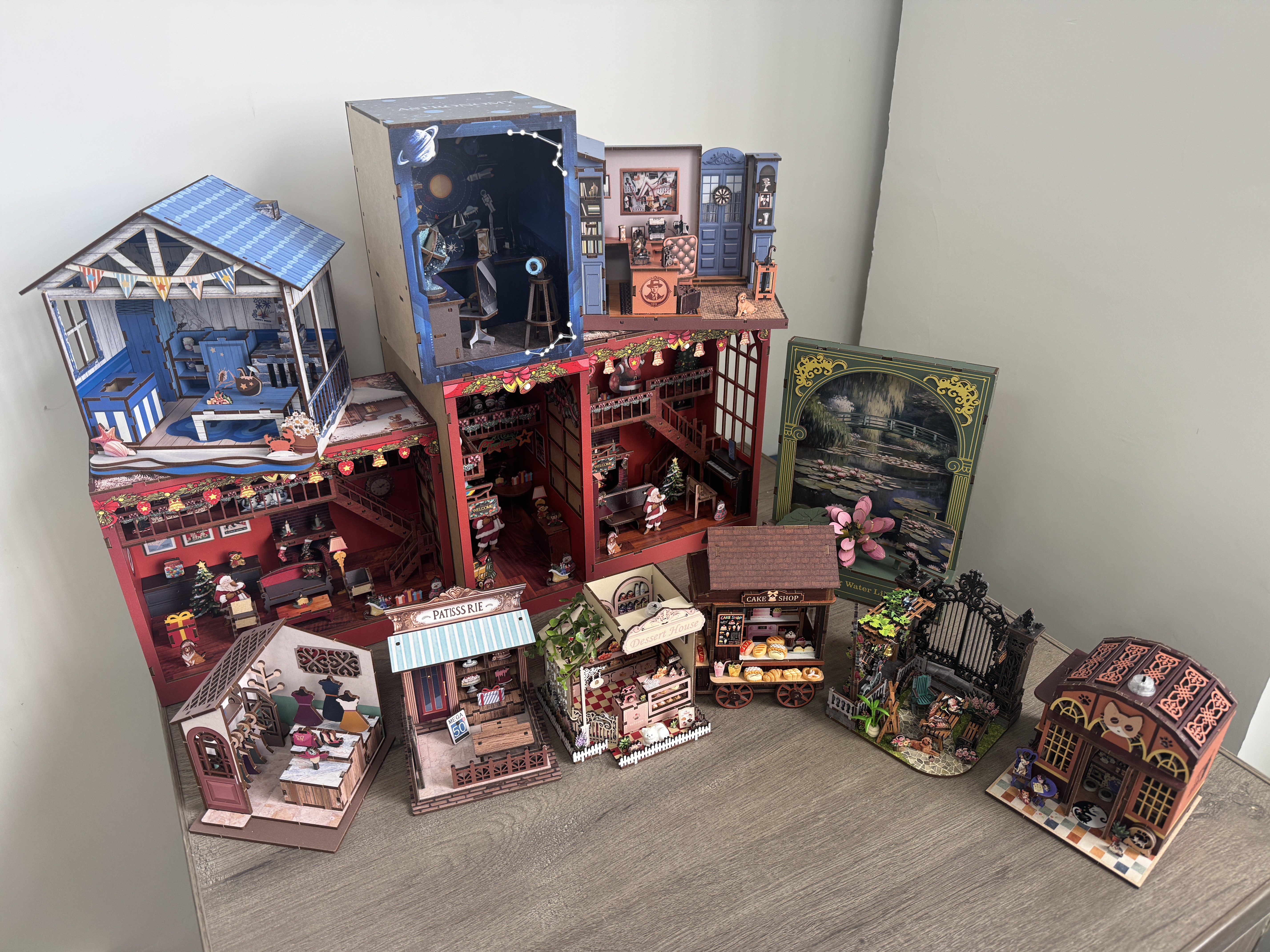
Production Economics: How MOQ 100 Optimizes DIY Wooden Doll House Manufacturing
Laser-Cutting Setup Costs and Batch Efficiency for Precision Panels
When making those detailed panels for DIY wooden dollhouses with lasers, there are some upfront costs involved in getting everything ready. We're talking about programming the machine, calibrating it properly, and running tests first. These setup costs usually come out around $200 for each new design. If we produce 100 units at once, that brings down the setup cost to just $2 per kit. But if we only make 10 units, suddenly that same setup costs $20 per kit instead. Keeping the laser cutting going nonstop saves about 15% on energy bills too, since machines don't sit idle between jobs. The shop can churn out roughly 25 to 30 complete kits every hour during an 8 hour workday when things run smoothly. However, smaller production runs mean stopping and starting often, which requires constant recalibration. This leads to more mistakes and actually wastes nearly a quarter of our available working time on switching between different projects according to what we've seen in our own shop experiments.
Material Yield Optimization in Birch Plywood and MDF for DIY Wooden Doll House Kits
The kits typically use standard sized 4 foot by 8 foot sheets made from birch plywood or medium density fiberboard as their main building material. When ordering minimum quantities of 100 units, manufacturers can leverage sophisticated nesting programs that boost material efficiency to around 95 percent, compared to just 78 percent when producing only 20 units at a time. This improvement cuts down on wasted lumber by approximately 1.5 tons each year across individual production lines. The cutting process maintains consistency across all pieces, keeping those tiny gaps between cuts (called kerfs) very uniform, and ensuring that parts fit together within less than half a millimeter tolerance. Buying in bulk at these volumes also brings about 12 percent savings through wholesale pricing from Forest Stewardship Council certified suppliers. Plus, packaging works out nicely since 40 completed kits fit perfectly on one standard pallet, making storage and shipping operations much smoother overall.
Supply Chain & Logistics: Packaging, Sourcing, and Scalability for DIY Wooden Doll House Orders
Sourcing Constraints: Pre-Cut Panels, Eco-Friendly Adhesives, and Printed Instruction Kits
Getting materials at a good price really depends on how much we buy at once. When we need those precision laser cut panels, buying large quantities of wood makes sense because it gets the most out of each sheet of birch plywood. But if someone wants just a few pieces, about 30% of the material ends up going to waste. The same goes for eco friendly glues and water based finishes. These come in set amounts from suppliers, so trying to get small batches just isn't practical. And then there's the issue with printing instructions in multiple languages. Setting everything up for print costs money, and the supplier won't do it unless we order at least 100 units. All these factors together explain why hitting that magic number of 100 units becomes so important for keeping costs down and maintaining steady supplies throughout our production process.
Flat-Pack Standardization and Carton Cube Utilization for Global Shipping
The flat pack approach really opens up possibilities for getting products around the world efficiently. When manufacturers stick to standard panel sizes, they can fill up about 96% of a shipping container's space. That cuts down on transportation expenses by roughly 22% when compared to all those awkwardly shaped packages we see so much of these days, according to recent shipping industry reports from last year. To maintain this kind of efficiency though, factories need to keep things consistent across their production runs, which usually means going with batch manufacturing methods rather than one-off productions. Small order quantities below minimum order levels typically end up needing special packaging solutions. This not only adds extra charges based on package dimensions but also creates more problems during handling at warehouses and ports. On the flip side, bigger order volumes tend to qualify for better rates from carriers, which helps make selling products internationally actually profitable for businesses.
B2B Commercial Logic: How MOQ 100 Supports Profitability and Channel Alignment
Setting a minimum order quantity of 100 units really helps with absorbing those fixed costs that come with wholesale operations. When production runs fall short of this number, they just can't justify the expense of creating custom tools which typically run around $5,200 per design plus all the quality assurance checks needed. That's why anything under 100 units often ends up costing money instead of making it. Once we hit that 100 unit mark though, manufacturers start seeing real savings from economies of scale. According to the 2023 Woodcraft Industry Benchmarks, production costs drop about 30% per item at this level, and retailers still maintain their healthy gross margins above 45%. Another thing working in our favor is how well this quantity fits standard shipping requirements. Most pallets hold about 40 kits each, so four pallets make up a full container load without leaving extra space wasted on partial shipments. What many don't realize is that this MOQ actually serves as a filter for serious business partners who plan ahead rather than placing random test orders. These kinds of orders mess up material planning and create problems down the line. The Furniture Supply Chain Report from 2024 shows dead stock risk jumps nearly 19% when companies accept smaller test batches. By sticking to this baseline requirement, we not only maintain strong relationships with specialty retailers but also generate enough revenue to invest back into developing new modular system designs and sourcing environmentally certified materials for future products.
Flexible Pathways: Alternatives to MOQ 100 for DIY Wooden Doll House Buyers
$450 Prototyping Fee vs. MOQ Waiver: When Customization Justifies Upfront Investment
When customers want something really special like custom window openings, engraved designs, or structural changes, there's a $450 fee instead of having to buy minimum quantities. This cost takes care of computer aided design work, adjusting machines for new specs, and putting together test samples by hand. Regular large orders tend to cover most engineering costs anyway, but this fee makes things safer for everyone involved when making one off items. A small company from Europe actually saw their profit margins jump by 23% after offering these personalized products. They managed to charge almost twice as much as standard items because people were willing to pay extra for something made just for them, as reported in last year's Craft Business Review study.
Tiered MOQ Models: 50-Unit Starter Batches with Premium Pricing for Boutique Retailers
Small retailers can access 50-unit starter batches at 15–20% higher per-kit pricing–balancing scalability limits with market-testing needs. This model maintains profitability via:
- Material consolidation: Aggregating birch plywood orders across multiple small batches
- Shared tooling slots: Cutting doll house panels alongside standard product lines
- Delayed finishing: Applying stains, labels, and final packaging only upon confirmed POs
A 2024 survey of 87 boutique toy stores found 68% preferred this tiered option, citing lower capital risk and faster shelf turnover–without compromising brand alignment or quality expectations.
FAQ
Why is a minimum order quantity (MOQ) of 100 units beneficial for DIY wooden dollhouses?
A MOQ of 100 units reduces setup costs, enhances material yield optimization, ensures consistent quality, and supports better supply chain logistics. It helps absorb fixed costs and leverages economies of scale to maintain profitability and channel alignment.
What alternatives are available for buyers who cannot meet the MOQ of 100 units?
Buyers can opt for customization by paying a prototyping fee or choose tiered MOQ models like 50-unit starter batches, although these may come with higher per-kit pricing to balance scalability with market-testing needs.
How does laser cutting contribute to the production efficiency of DIY wooden dollhouses?
Laser cutting is efficient as it reduces energy bills when the machines operate continuously, and brings down setup costs by spreading them over larger batches. Smaller production runs, however, might lead to frequent recalibrations and increased error rates.
Table of Contents
- Production Economics: How MOQ 100 Optimizes DIY Wooden Doll House Manufacturing
- Supply Chain & Logistics: Packaging, Sourcing, and Scalability for DIY Wooden Doll House Orders
- B2B Commercial Logic: How MOQ 100 Supports Profitability and Channel Alignment
- Flexible Pathways: Alternatives to MOQ 100 for DIY Wooden Doll House Buyers
- FAQ