
 EN
EN




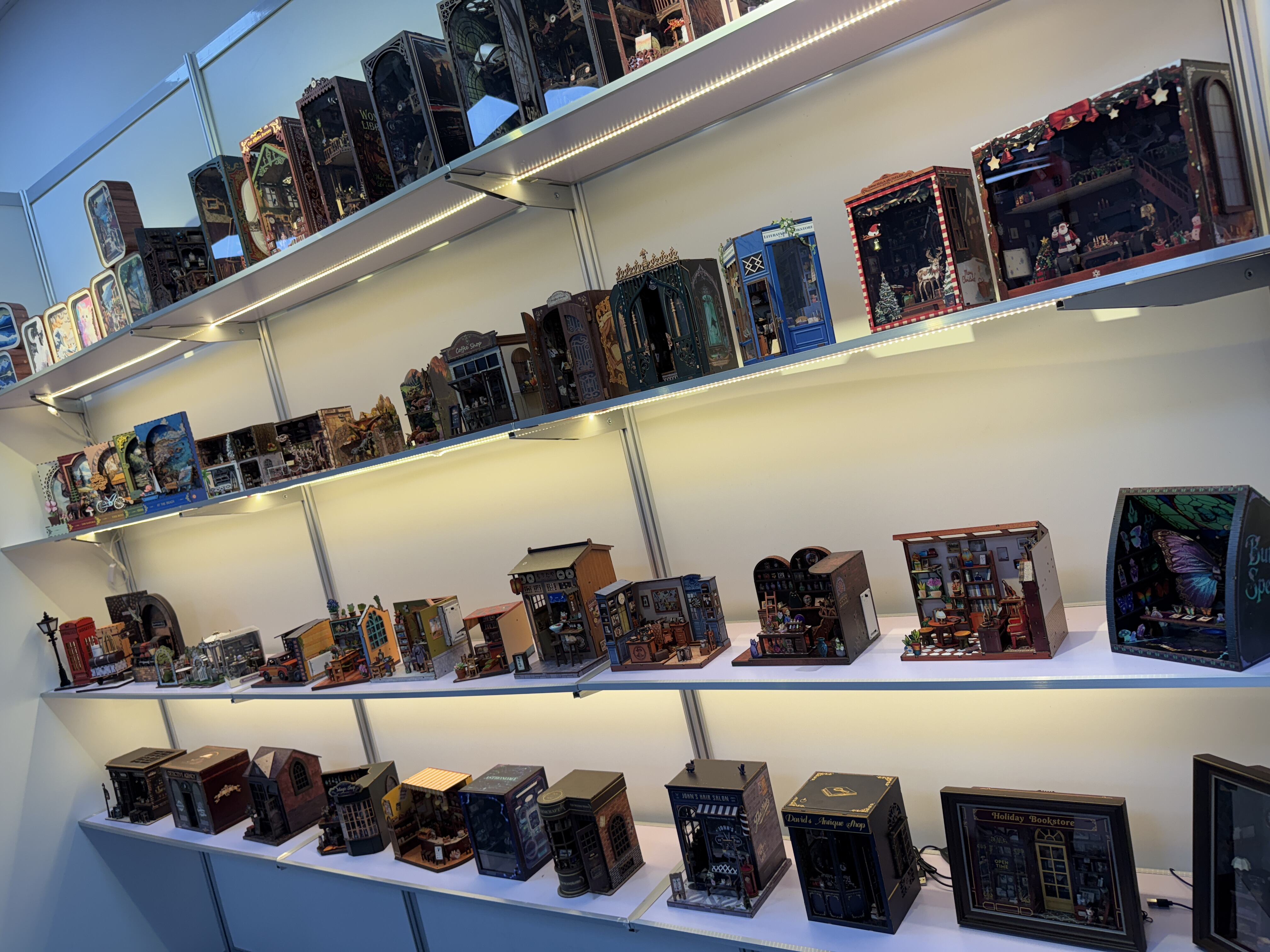
Assess Core Manufacturing Capabilities for Miniature House Wholesale
Production Capacity and Scalability for Your Volume Stage
Validating a factory’s true output potential prevents costly bottlenecks. For miniature house wholesale, production tiers vary significantly:
- Small-scale partners (1k–10k units annually) suit startups with MOQs of 100–500 pieces and 4–8 week lead times.
- Medium-scale factories handle 10k–1M units yearly, ideal for growth-stage brands needing 500–2k MOQs.
Demand proof of repeatable capacity through:
- Takt time calculations (cycle time vs. demand)
- Pilot run validation with pass/fail defect thresholds (<1% rework rate)
- OEE (Overall Equipment Effectiveness) audits of machinery
As noted in production capacity validation guides, “Your biggest risk isn’t price–it’s believing brochure claims.” Scalability requires documented expansion protocols for materials, labor, and equipment–not just theoretical headroom.
Technical Expertise in Materials, Precision Assembly, and Modular Integration
Material selection dictates durability, safety, and regulatory compliance. Prioritize factories with:
- ASTM F963-compliant material sourcing (non-toxic paints, fire-retardant woods)
- Micro-tolerance assembly (<0.5mm variance in joinery)
- Modular design experience, including interchangeable roofs and walls for custom configurations
Precision is verified through:
- First-article inspection reports, not just final QC
- Cross-section stress testing, such as 50+ load cycles on hinged components
- Prototype iteration speed of £3 days for minor design tweaks
Factories without material science labs or integrated 3D prototyping tools often lack the technical depth to sustain consistent quality across complex miniature house assemblies–especially under volume ramp-up.
Verify Quality Assurance, Certifications, and Delivery Reliability
ISO, CE, and Structural Compliance: Non-Negotiables for Miniature House Wholesale
Getting ISO 9001 certified basically means having paper trails for everything quality related. When selling tiny houses worldwide, getting that CE mark isn't optional at all. It shows the product meets EU standards for how sturdy it is, safe mechanically, and what materials were actually used. Buyers should ask for independent testing results that back up claims about how much weight the structure can hold. Look for reports showing static load tests at least three times what the house will normally carry. Also check if materials have been tested against things like UV damage over time and how they handle repeated exposure to different humidity levels. If a factory can't show these documents when asked, that usually points to bigger problems with keeping track of production details and who's responsible for what during manufacturing.
Key Performance Metrics: Defect Rate, OTIF, and Sample Approval Cycle
Track three quantifiable indicators to assess operational reliability:
- Defect Rate: Target £0.5% based on AQL Level II pre-shipment inspections
- OTIF (On-Time In-Full): Aim for ≥98%–a benchmark tied to lean logistics and real-time production visibility
- Sample Approval Cycle: Require £10 business days from drawing submission to approved physical sample
These metrics reflect underlying process discipline–not just marketing claims. Leading manufacturers achieve them through automated in-line QC checkpoints, digital work instructions, and integrated ERP scheduling–not manual overrides.
Identify Genuine Factory Partners vs. Trading Intermediaries
Red Flags and Due Diligence Tactics to Confirm Ownership and Production Footprint
It's really important to tell real manufacturing plants apart from those middlemen companies that just trade products. Watch out for warning signs when working with suppliers. If they dodge talking about the actual materials used or how things get assembled with precision, that's suspicious. Also problematic are those who won't let anyone audit their factory floor or can't show proper paperwork proving what they actually produce. Think about things like maintenance records for machines or proof of staff training sessions. Real manufacturers have engineers on site, develop molds themselves, and know all about putting components together in modules. They offer more than just superficial changes to products.
Conduct due diligence by:
- Requesting proof of facility ownership (utility bills, property deeds, or local tax registration)
- Verifying machinery certifications (e.g., CNC calibration logs) and anonymized payroll records
- Reviewing live production floor video calls–not just curated reels
Trading companies often obscure subcontracting chains, increasing supply chain risk by up to 40% (Global Sourcing Review, 2023). Prioritize partners who maintain £1.5% defect rates and grant full transparency into their production footprint.
Prioritize Strategic Partnership Alignment Over Transactional Sourcing
Moving beyond price-focused transactions unlocks long-term value in miniature house wholesale. Strategic partnerships emphasize shared goals–innovation, scalability, and joint risk mitigation–rather than isolated cost negotiations.
| Partnership Dimension | Transactional Sourcing | Strategic Alignment |
|---|---|---|
| Primary Focus | Unit cost reduction | Total value creation |
| Relationship Horizon | Single order | Multi-year roadmap |
| Communication Style | Reactive & formal | Proactive collaboration |
| Innovation Input | Minimal | Co-developed solutions |
When factories genuinely care about helping businesses grow, they don't just wait for problems to arise. These forward-thinking manufacturers actually propose tangible improvements, keep their eyes on market trends, and work together through supply chain hiccups - something absolutely essential when putting together those intricate mini houses with precise measurements and parts from multiple sources. According to recent industry data from 2023, this kind of partnership cuts down on expensive redesign work by around 19%. The result? More consistent products that customers actually want, which translates into better sales performance throughout wholesale networks. Businesses that pick suppliers who are truly invested in shared success create something much stronger than just temporary cost savings. They build systems capable of handling whatever challenges come next while still growing steadily over time.
FAQs
-
What is MOQ?
MOQ stands for Minimum Order Quantity, which is the smallest amount a supplier is willing to sell. -
How can I verify a factory partner's capabilities?
You can verify capabilities through audits, inspection reports, and live video calls showing the production process. -
Why is ISO certification important for manufacturing?
ISO certification ensures quality management systems are in place, providing reliability and quality assurance for products. -
What are trading intermediaries?
Trading intermediaries are companies that do not produce goods but instead sell products made by other factories, often obscuring the supply chain.